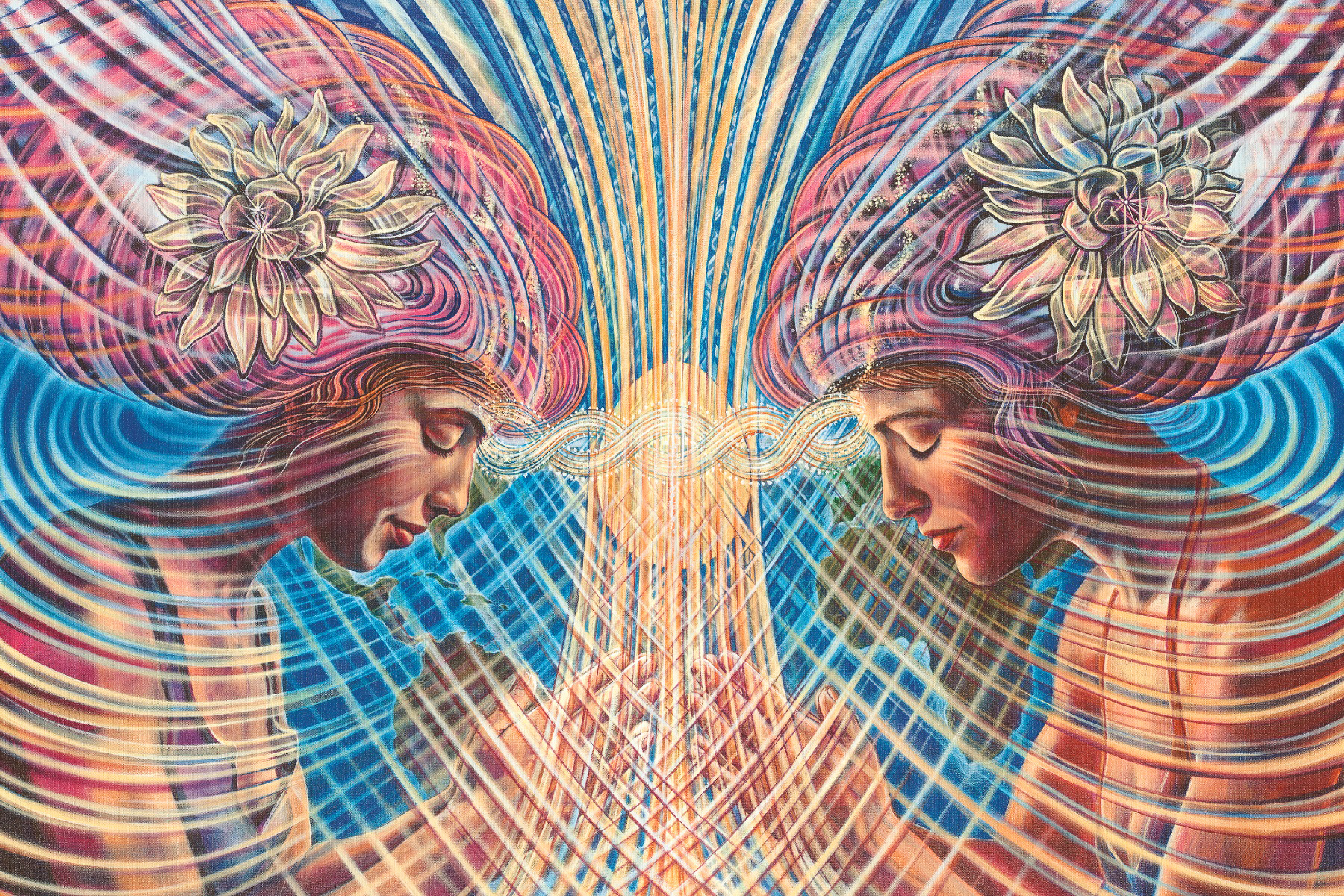
The idea that humanity is guided by individuals who have attained exceptional wisdom or expanded consciousness is one of the oldest themes in spiritual history. Although described in many different ways, cultures throughout the world have preserved traditions of enlightened teachers, sages, Masters and higher beings whose purpose is to encourage the spiritual evolution of humanity.
Names, symbols and beliefs have varied enormously, yet the underlying theme has remained remarkably consistent: that human consciousness can continue to develop far beyond its ordinary condition, and that those who have travelled further may assist others along the same path.
The Ancient World
Long before the rise of the world’s major religions, many ancient civilisations spoke of individuals who possessed unusual wisdom and spiritual understanding.
The mystery schools of Egypt, Greece and other early cultures taught that human beings were capable of awakening to higher levels of consciousness through disciplined living, meditation, contemplation and inner transformation. Spiritual knowledge was often preserved within small schools, where it was passed from teacher to student over many generations.
These traditions emphasised direct experience rather than intellectual belief, a theme that continues throughout much of spiritual history.
India and the East
Some of the most detailed descriptions of advanced consciousness emerged within the spiritual traditions of India.
The Upanishads, Yoga, Vedanta and later teachings described enlightened beings who had realised their essential unity with the Absolute. Buddhism introduced the ideal of the Bodhisattva — one who seeks enlightenment not only for personal liberation but also for the benefit of all living beings.
Across Asia, similar ideas appeared in different forms, suggesting that compassion, wisdom and selfless service naturally accompany spiritual maturity.

The Great Teachers
History has been shaped by remarkable individuals whose influence extended far beyond their own lifetimes.
Figures such as Krishna, the Buddha, Lao Tzu, Jesus, and many other great teachers transformed the spiritual outlook of entire civilisations. Their teachings differed in language, culture and emphasis, yet many shared common themes of compassion, inner transformation, love, humility and direct knowledge of spiritual reality.
Whether viewed as founders of religions, enlightened individuals or expressions of a wider spiritual purpose, their influence continues to inspire millions of people today.
Mystical Traditions
Alongside the major religions, mystical traditions have consistently emphasised direct spiritual experience.
Christian mystics, Sufi teachers, Jewish Kabbalists, Taoist practitioners and contemplatives from many other traditions described experiences of inner Light, divine Sound, profound stillness and union with the Divine.
Although often expressed through different symbols and languages, these accounts frequently point towards remarkably similar experiences of expanded consciousness.
The Esoteric Tradition
Throughout history, there have also been traditions that spoke more openly of a Spiritual Hierarchy or a community of advanced beings working quietly for humanity.
Different schools have referred to Masters, Adepts, Mahatmas or Elder Brothers of Humanity. While their descriptions vary considerably, they commonly portray highly developed individuals whose purpose is not personal authority but service, guidance and the gradual upliftment of human consciousness.
These ideas have influenced many streams of modern esoteric thought while remaining only one interpretation among several possible ways of understanding spiritual evolution.

The Modern Era
The nineteenth and twentieth centuries saw renewed public interest in meditation, comparative religion and the study of consciousness.
Ancient teachings became more widely available, while communication between cultures allowed spiritual ideas from East and West to meet as never before. Meditation gradually moved from being the practice of relatively small communities to becoming familiar throughout much of the world.
This broader exchange encouraged many people to explore spirituality through direct experience rather than inherited belief alone.
Continuing the Journey
Today, the history of the Spiritual Hierarchy is still being written.
Many people believe humanity has entered a period in which spiritual understanding is becoming increasingly accessible across cultures, religions and philosophies. Others see these developments simply as the natural evolution of human consciousness.
Whatever conclusion one reaches, history reveals a remarkable continuity: generation after generation, people have reported experiences of awakening, inner transformation and guidance that seem to point beyond the ordinary limits of human awareness.
The story therefore remains unfinished, inviting each generation to explore these questions afresh.
In Essence
Across thousands of years, certain themes appear repeatedly:
● Human consciousness is capable of profound development.
● Great teachers have appeared in every age.
● Mystical experience has been reported in many cultures.
● Wisdom has often been passed from teacher to student.
● Service and compassion are recognised as signs of spiritual maturity.
● Direct experience has consistently been valued alongside study and belief.
● Different traditions may describe similar realities using different language.
History cannot prove the existence of a Spiritual Hierarchy, nor can it dismiss the possibility. What it clearly demonstrates is that the idea of higher spiritual guidance has accompanied humanity throughout recorded history, continuing to inspire enquiry into the deeper nature of consciousness and our place within it.
Click for the next page: Today
